Back on His Feet: A Decade-Long Search Ends in Hope
November 16, 2026
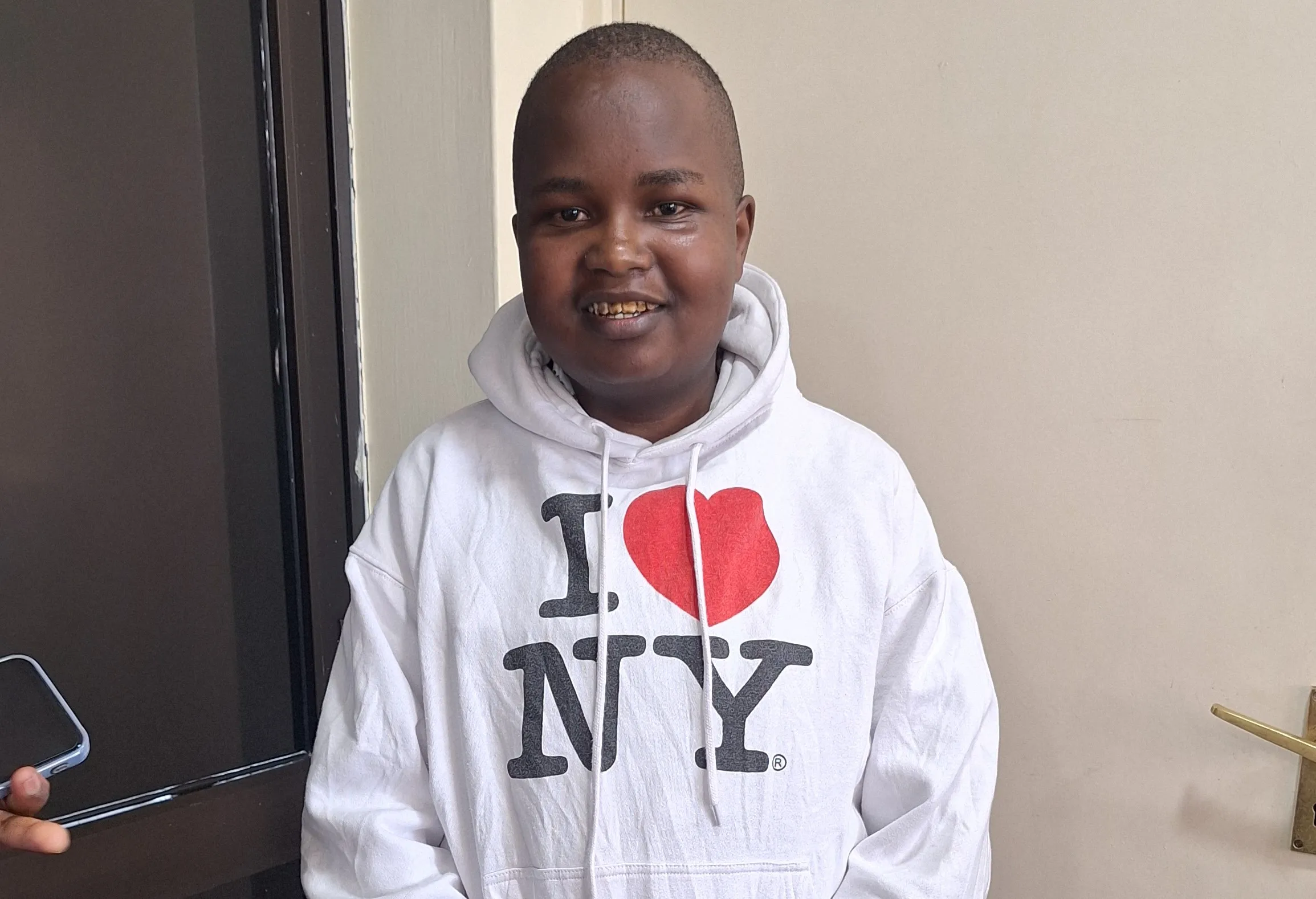
After ten years of unexplained headaches, a swelling no one could explain and a fight to stay in school, 17-year-old James finally found answers, and his family found hope.
James Muigai Wairimu was seven years old when the headaches began.
James, now 17, comes from Naivasha. His mother, Dorcas Wanjiru Karanja, works at a flower farm and is the family’s breadwinner. For a decade, James lived with headaches that no one could explain. In Class 7, a new and worrying sign appeared: swelling on one side of his head, which began one day after school and did not go away.
His family did what any worried family would. They took him to a nearby private dispensary, and then to other hospitals. Treatment was given, but the swelling continued, and no one could say what was actually wrong.
The uncertainty took an emotional toll on the entire family. Moving between healthcare facilities and clinics in search of a diagnosis was exhausting, at the same time the prolonged illness disrupted James’s education and his ability to enjoy the ordinary experiences of adolescence.
With every visit, the picture grew more worrying. His skin turned pale, and he began to look much older than his years. His blood pressure and sugar levels were found to be high. Eventually, he lost the ability to walk. James could not continue with his education at Form 1, a loss that hurt a bright young boy who simply wanted to be at school with his friends.
Not knowing where to turn next only added to their distress as his mother Dorcas had no idea where to find the right doctor. Like many families facing a complex medical condition, they were searching not only for treatment but also for clarity, reassurance and a way forward.
The turning point came when doctors referred James to Aga Khan University Hospital, Nairobi, where he was placed under the care of Dr. Beverly Cheserem. His family arrived afraid, as any family would be after so many disappointments. His diagnosis meant he would need neurosurgery, and the thought of such a procedure on their young son was frightening.
What calmed them was how openly the doctors spoke. They took time to explain James’s condition and assured the family that surgery was the best option for him. Fear gave way to trust.
In March 2026, James underwent a craniotomy, a delicate neurosurgical procedure. He spent three weeks in the hospital, where, Dorcas says, the team was both reassuring and welcoming. From the first conversation to the last, the family felt cared for, not just treated.
The cost of such complex care could easily have been out of reach for a family like James’. It was met through a combination of support: the AKUH Welfare Programme and Social Health Authority (SHA) rallied around them to finance the treatment.
Today, James is on the road to recovery. The swelling has stopped, and his body has returned to normal. He has regained functions that once seemed lost, like walking and bending. After discharge, he continued to receive care through follow-up clinics, and the boy who could not walk is on his feet again.
For his family, the change is hard to put into words. The gratitude has spread beyond their own home. The neighbourhood, too, is thankful to the hospital for saving James’s life.
“May God bless them,” says Dorcas to the team who cared for her son. She praises them for having a good heart and says the family would love a chance to come back to the hospital solely for the purpose of showing their appreciation in person.
Ten years of searching, fear and uncertainty ended in a hospital ward, with a team that listened, explained and cared. For James and his family, there is finally a way forward, and a boy who can walk, bend and look to the future again.
Related News & Blogs
You can read related news and blogs