
)
Aziz Khalid, an educational publisher accustomed to the predictable rhythms of books and learning, never expected the sudden detour his life would take.
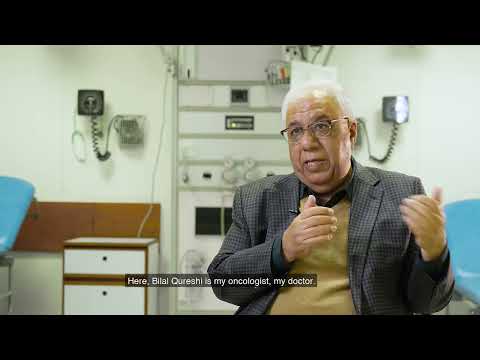
When severe prostate troubles led him to the hospital, he found himself facing a daunting reality. After undergoing two surgeries under the care of urologist Dr Hammad Athar, Aziz was given the news that he needed to be referred to Oncology for cancer—a word that carries an undeniable weight of fear for anyone who hears it.
Walking into the Oncology ward at the Aga Khan University Hospital (AKUH), Aziz was consumed by anxiety. "Naturally, no cancer patient walks in with a smile," he recalled. His mind was racing with terrifying questions about radiation: How much is this going to hurt? What will happen to me?
But then, he met Dr Bilal Qureshi, radiation oncologist at AKUH.
Dr Qureshi’s pleasant and reassuring demeanor acted as an immediate balm. In their very first meeting, Dr Qureshi gently walked Aziz through the process, explained the advanced technology they would be using, and promised him that he was in safe hands. "He made me feel so relaxed that half of my worries disappeared," Aziz remembers.
The treatment itself was not without its hurdles. Radiation requires strict, often uncomfortable preparation, like drinking specific amounts of water and enduring the agonising wait for the exact right moment to begin the procedure. During these tough days, the technicians and nurses were endlessly cheerful and cooperative. Instead of treating him like just another file, they guided him through the physical and emotional hurdles with warmth and patience.
What struck Aziz the most was the sheer humanity and accessibility of his medical team. If he had a sudden worry, he could stop his doctor in the corridor. Instead of being brushed off or told to book an appointment, he was met with a listening ear.
Today, Aziz looks back at his journey with overwhelming gratitude. While he prays that no one ever has to experience cancer or cross the threshold of a hospital, he believes that if someone must, it should be a place like AKUH.
"I am deeply thankful to AKUH and to Prince Karim Aga Khan," Aziz reflects with a full heart. "I pray that the world sees more people like him, so that humanity can continue to experience this kind of profound goodness."


)
)
)