
)
Seventeen-year-old matriculation student Umair Ramzan was just like any other teenager, full of energy and a love for riding his bike. One day, while riding down a relatively empty road, his life took an unexpected turn. A truck driving ahead of him suddenly slammed on its brakes. While Umair managed to stop his bike in time, the car travelling behind him did not, resulting in a devastating rear-end collision.
Following the accident, Umair was rushed to the Aga Khan University Hospital (AKUH). The medical team immediately performed a CT scan, which revealed a grim reality: the impact had been so severe that the skull bone on one side of his head was almost completely destroyed, leaving behind only small, fragmented ‘islands’ of bone. It was a terrifying moment for Umair and his family, but the medical team was ready with an innovative plan.
When the family consulted with Dr Shahzad Shamim, Consultant and Section Head, Neurosurgery, they were introduced to a groundbreaking solution: a customised, artificial bone implant. Specifically, the doctors recommended a 3D-printed PEEK (Polyetheretherketone) implant.
PEEK is an FDA-approved, biocompatible material that closely mimics the natural properties of human bone. Unlike other traditional implants that require heavy materials to provide enough strength, or lighter materials that end up being too fragile, PEEK offers the perfect balance. It is incredibly strong without being heavy, making it the most successful and effective option available today.
Umair was the perfect candidate for this cutting-edge, customised procedure. Before the actual surgery, the medical team went above and beyond to ensure perfection. They created a 3D-printed practice model and even allowed Umair to review and approve how it would look on his head.
The accident had caused Umair's muscles in one side of his head to loosen, but the 3D printing technology allowed the doctors to compensate for this. They carefully designed the implant with specific curves to match the opposite side of his skull perfectly. The goal was to make the implant look completely natural, as if the severe defect had never even happened.
Once the custom 3D-printed implant was ready, Umair was admitted for the operation. To his relief, the entire surgical process was incredibly smooth, and Umair reported feeling absolutely no pain throughout the entire ordeal.
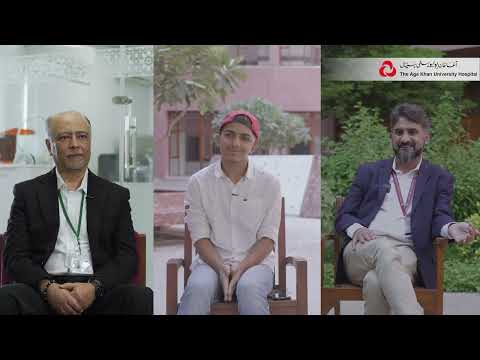
His family was deeply moved by the exceptional care, cooperation, and dedication provided by Dr Shamim and his team. Today, Umair is fully recovered and back to being a normal, active teenager. Thanks to this medical marvel, he is once again playing sports and cycling, completely free from the fear of falling that once haunted him.


)
)
)